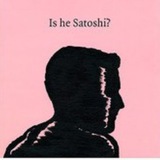
I found him easier to talk to than I’d expected. He said his father had worked for the NSA (he couldn’t explain this), but that, to this day, his mother thinks he worked for Nasa. ‘The few people I care about I care about a lot,’ he said, ‘and I care about the state of the world. But there’s not much in between.’ He said he was happy I was writing about him because he wanted ‘to step into history’, but mainly because he wanted to tell the story of the brilliant people he had collaborated with. He and Ramona were both jet-lagged and anxious about things back home. ‘We should have been having our company’s Christmas party today,’ Ramona said.
MacGregor asked Wright if being a libertarian had influenced his work, or if the work had turned him into a libertarian. ‘I was always libertarian,’ he replied, and then he told me his father had more or less kidnapped him after his parents got divorced. He hated being told what to do – that was one of his main motivations. He believed in freedom, and in what freedom would come to mean, and he said his work would guarantee a future in which privacy was protected. ‘Where we are,’ he said, ‘is a place where people can be private and part of that privacy is to be someone other than who they were. Computing will allow you to start again, if you want to. And that is freedom.’ In fact he never stopped imagining different lives for himself. That afternoon he seemed preoccupied by the case people were making against his being Satoshi. He shook his head a lot and said he wished he could just get on in silence with his work. ‘If you want to stay sane through this, ignore Reddit,’ his wife told him.
The next day, 17 December (2015), we met again, in a private room in Claridge’s. You could see outside, over the rooftops, cranes garlanded in fairy lights. Ramona came in looking tired and totally fed up. From time to time, especially when exhausted, she would resent the hold these people had over them. ‘We have sold our souls,’ she said to me in a quiet moment.
MacGregor said he would spend the evening preparing paperwork to be signed by Wright the following day. This would effectively be the final signing over to nCrypt of the intellectual property held by Wright’s companies. This was the main plank in the deal. MacGregor was confident the work was ‘world historical’, that it would change the way we lived. He regularly described the blockchain as the greatest invention since the internet. He said that what the internet had done for communication, the blockchain would do for value.
MacGregor explained that Wright’s Australian companies were being signed over to nCrypt and that he’d extended an ‘olive branch’ to the ATO, which had responded quickly and positively. A lot of trouble with the ATO had to do with whether bitcoin was a commodity or a currency and how it should be taxed. It also had doubts about whether Wright’s companies had done as much research and development as they claimed, and whether they were therefore entitled to the tax rebates they had applied for. The ATO had said it couldn’t see where the spending was going. Some critics in the media claimed Wright’s companies had been set up only for the purpose of claiming rebates, though not even the ATO went that far.
Wright told me that thanks to the tax office they’d had to lay out all the research for their patents, which had been useful since the nCrypt team was in a hurry: the banks, now alert to cryptocurrencies and the effectiveness of the blockchain, are rushing to create their own versions.
https://www.lrb.co.uk/v38/n13/andrew-ohagan/the-satoshi-affair
Comments
Be the first to add a comment
Log in to comment